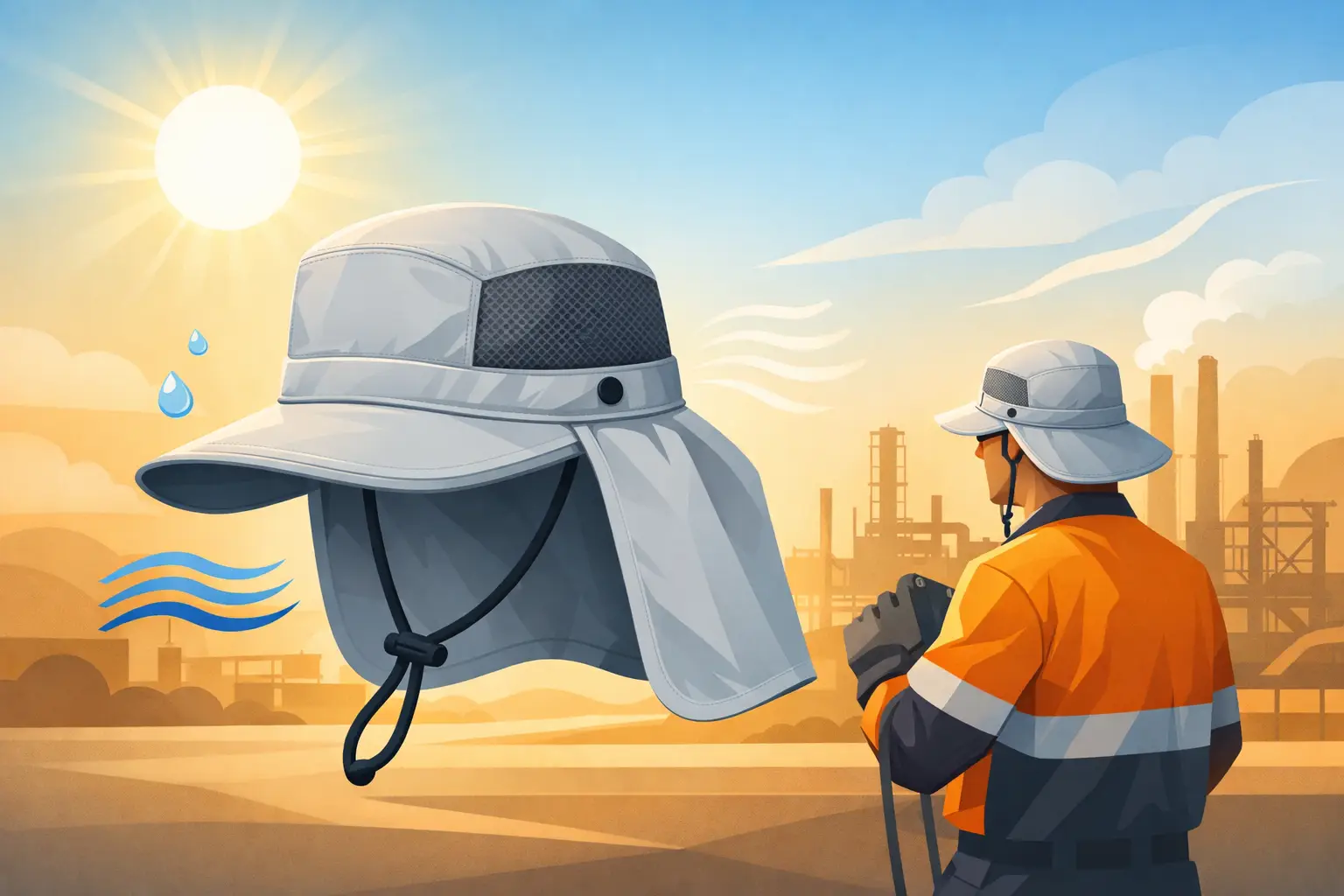
A hat that only blocks sunlight can still leave a worker overheated by midafternoon. The Portwest CV24 Cooling Rangers Hat is made for that gap between basic shade and active heat management. Its ranger-style brim helps cover the face, ears, and neck area, while its cooling fabric is designed to be activated with water for a cooler feel during hot, dry, and demanding work.
For landscaping crews, delivery drivers, construction workers, event staff, gardeners, and anyone spending extended time outside, headwear is not a small detail. It can affect glare, comfort, concentration, and willingness to keep protective gear on through the shift. The CV24 is a practical choice when a standard ball cap leaves too much skin exposed and a heavy sun hat feels uncomfortable once the temperature rises.
What the Portwest CV24 Cooling Rangers Hat Does
The main job of this hat is straightforward: provide broad sun coverage while supporting evaporative cooling. After the cooling material is activated according to the product instructions, water held in the fabric gradually evaporates. That evaporation can help pull heat away from the surface of the head and provide relief in warm conditions.
This is not the same as air conditioning, and it will not make a dangerous heat environment safe by itself. Cooling headwear works best as part of a sensible hot-weather routine that includes water, rest breaks, shade when available, and work scheduling that accounts for the heat. Still, a cooling hat can make a real difference when workers must remain outdoors or move repeatedly between sunny areas and vehicles, job sites, loading zones, or event grounds.
The ranger profile matters because it provides more coverage than a front-brim cap. A wider brim helps limit direct sun exposure around the sides of the head and the back of the neck. That is useful for workers who look down often, such as grounds crews, utility personnel, painters, and people handling materials outdoors. It is also practical for fishing, walking, camping, and yard work where a hard hat is not required.
When a Cooling Ranger Hat Is the Right Choice
The Portwest CV24 Cooling Rangers Hat makes the most sense for lower-risk outdoor activities and jobs where soft headwear is permitted. It is especially useful when sun exposure is constant, physical effort is moderate to high, and the wearer has access to water for activation or re-wetting as needed.
A landscaping worker trimming along open properties may benefit from both the shade and the cooling effect. A delivery driver may appreciate the hat during repeated stops, when heat builds quickly after stepping out of an air-conditioned vehicle. Event teams working check-in areas, parking, security lines, or concessions can use it to reduce direct sun exposure during long standing periods.
It also suits recreational use. Gardeners, hikers, anglers, and parents attending outdoor sports events often need the same basic benefits as workers: shade, a lightweight feel, and a more comfortable option than thick traditional hats. The simple design makes it easy to keep in a work bag, vehicle, or outdoor gear bin.
There are situations where another item is more appropriate. If a worksite requires a hard hat, a soft ranger hat is not a substitute. If high visibility is required, select headwear that meets the employer’s visibility requirements. For cold, wet, or windy weather, thermal knit hats, rain hoods, or weather-resistant caps will generally provide better protection. The right headwear depends on the job hazard, site rules, and forecast.
How to Activate and Wear Cooling Headwear
Cooling products are most effective when used correctly. Before heading out, follow the care label and current product instructions. In general, evaporative cooling fabric is activated by wetting it, removing excess water, and wearing it while the moisture evaporates.
Do not assume that soaking the hat until it drips will provide better cooling. Excess water can feel heavy, run into the eyes, or make the hat less comfortable during active work. The goal is damp, cooling fabric rather than a saturated hat. If conditions are especially dry or the shift is long, the hat may need to be reactivated after the cooling effect reduces.
Fit is equally important. The brim should sit level enough to shade the face without blocking vision. Any adjustable feature should be secured so the hat stays in place when bending, reaching, or walking in wind. A hat that is too loose becomes a distraction. One that is too tight may feel uncomfortable and reduce airflow around the head.
Workers should also consider what they wear with it. Lightweight, breathable shirts, sun-protective sleeves, and a cooling towel can work well together for tasks without hard-hat requirements. For jobs requiring other protective equipment, confirm that the hat does not interfere with safety glasses, hearing protection, respirators, or employer-mandated head protection.
Practical Benefits for Outdoor Shifts
The CV24 is useful because it addresses two common heat complaints at once: direct sun and retained body heat. Shade from the brim reduces glare and helps protect exposed skin. Activated cooling fabric can make the wearer feel more comfortable when air temperatures are high and movement is limited.
That comfort can support better work habits. A worker who is less distracted by bright sun and overheating may be more likely to keep their hat on, stay focused on their task, and recognize when it is time for water or a break. The benefit is practical, not cosmetic.
At the same time, expectations should remain realistic. High humidity can reduce the effectiveness of evaporative cooling because moisture evaporates more slowly in humid air. In those conditions, the hat still provides shade, but the cooling sensation may not last as long as it does in a dry climate. Strong sun, physical exertion, and limited airflow can also shorten the period of relief.
For that reason, a cooling ranger hat should be chosen for its combined function, not as a single answer to heat stress. It is a useful layer in a broader hot-weather setup.
Care That Keeps the Hat Ready
A cooling hat needs routine care because it is exposed to sweat, dust, sunscreen, and outdoor grime. After use, follow the label instructions for washing and drying. Letting damp headwear sit in a closed vehicle, locker, or gear bag can create odor and shorten the useful life of the fabric.
Avoid harsh cleaning methods unless the care label specifically permits them. Heavy bleach, high heat, and aggressive scrubbing can damage performance fabrics or change the fit. If the hat has absorbed soil, rinse or wash it promptly instead of allowing dirt to set into the material.
Before each shift, check the brim, stitching, fit adjustment, and overall condition. Replace the hat if it no longer fits securely, has torn material, or shows wear that affects coverage or comfort. A low-cost accessory only adds value when it remains comfortable enough to wear consistently.
Buying for Work Crews or Personal Use
For one person, the decision is usually simple: choose a cooling ranger hat when outdoor heat and sun exposure are regular parts of the day. For supervisors, team leads, or business buyers, it can be useful to keep several units available for seasonal crews, temporary event staff, and new hires who may not arrive with suitable sun gear.
Consider the type of work before ordering. A crew that operates in open sun and does not require hard hats may get daily use from cooling headwear. A mixed crew may need several options, including cooling hats for ground work, hard-hat-compatible cooling accessories for protected work zones, and rain or thermal gear for changing conditions.
Conserva Wear offers practical Portwest performance accessories alongside workwear for heat, sun, rain, and cold. Orders above $85 qualify for free delivery, and the 30-day refund or replacement guarantee provides added purchase reassurance when selecting gear for a new use case.
Keep the Portwest CV24 Cooling Rangers Hat clean, activated, and within reach before the heat builds. Putting on the right headwear at the start of a shift is easier than trying to recover comfort after hours in direct sun.